
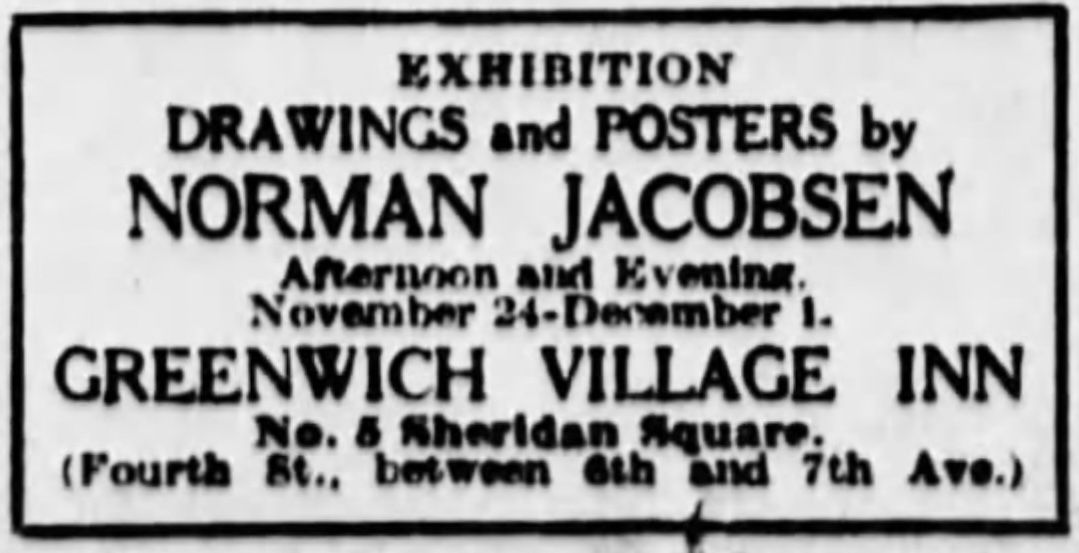
November 24, 1917
Exhibition – Drawings & Posters by Norman Jacobsen

November 24, 1917
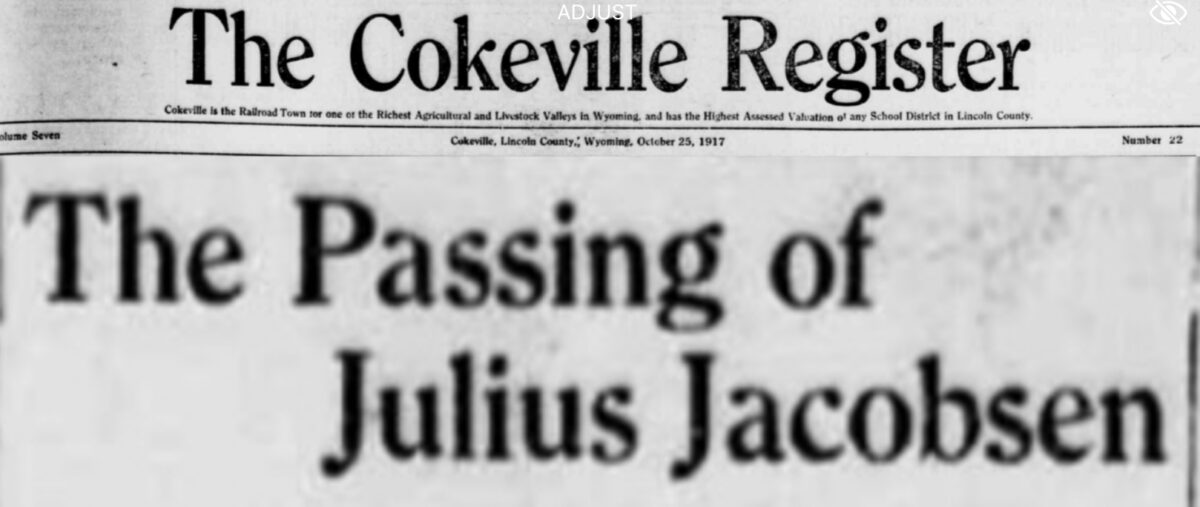
October 25, 1917
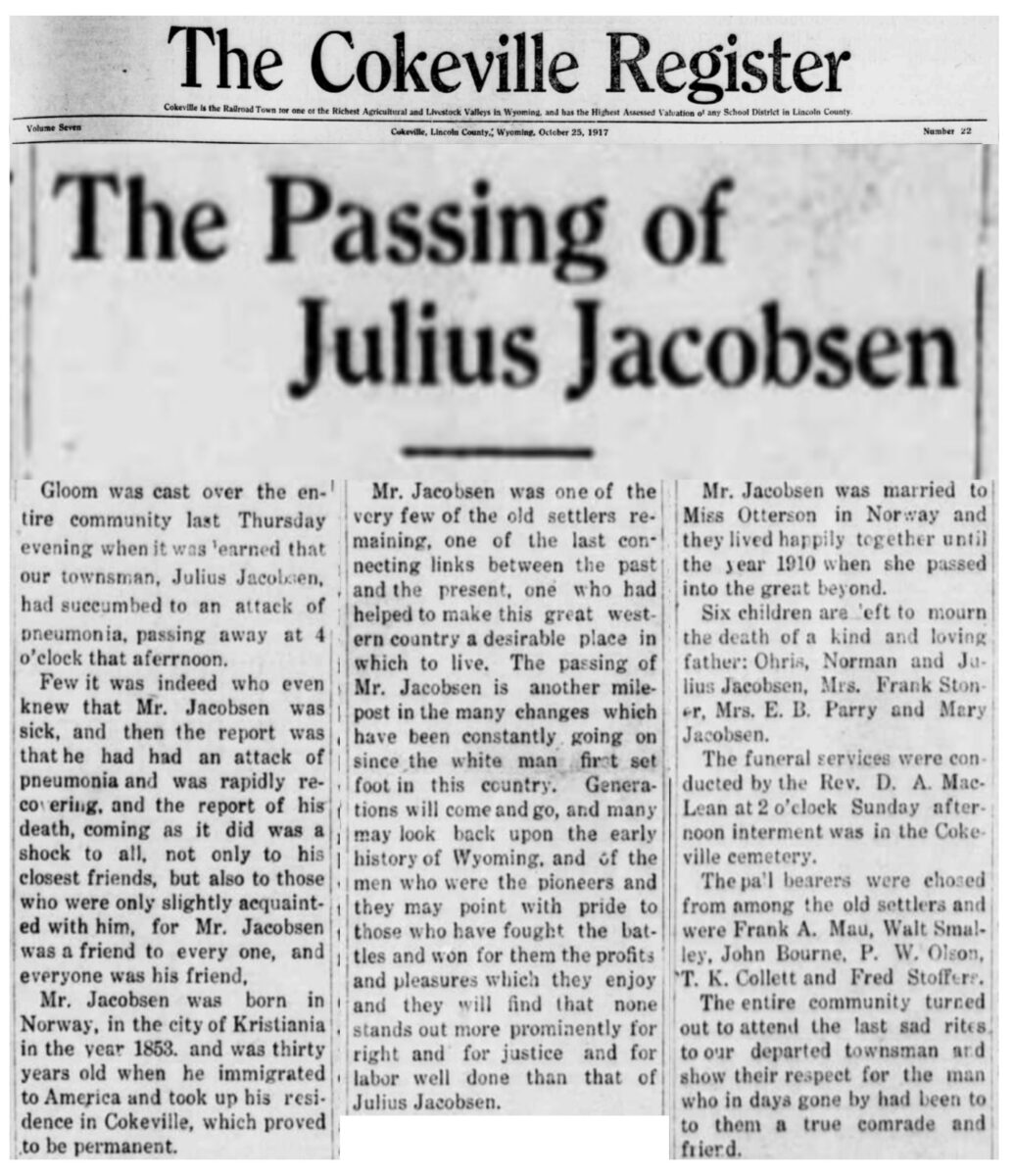
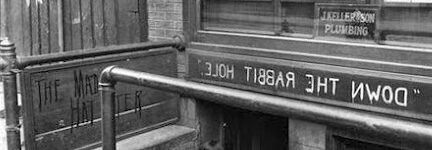
September 16, 1916
After returning from art school in Paris and studying at the St. Louis School of Fine Arts (Missouri), Edith Unger made her way to Greenwich Village in Manhattan (circa 1916). Soon after settling, she opened a tea room in the basement at 150 West 4th Street, near the corner of 6th Ave.
Edith’s cozy below-ground shop would become famous among the hidden Bohemian destinations haunted by the artsy crowd.
Edith christened the Mad Hatter by painting a sign about the entrance “ELOH TIBBAR EHT NWOD” — a tongue in cheek backwards spelling of Down the Rabbit Hole.
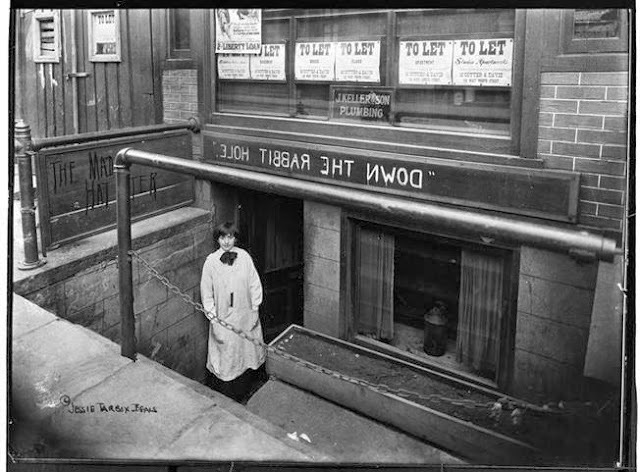
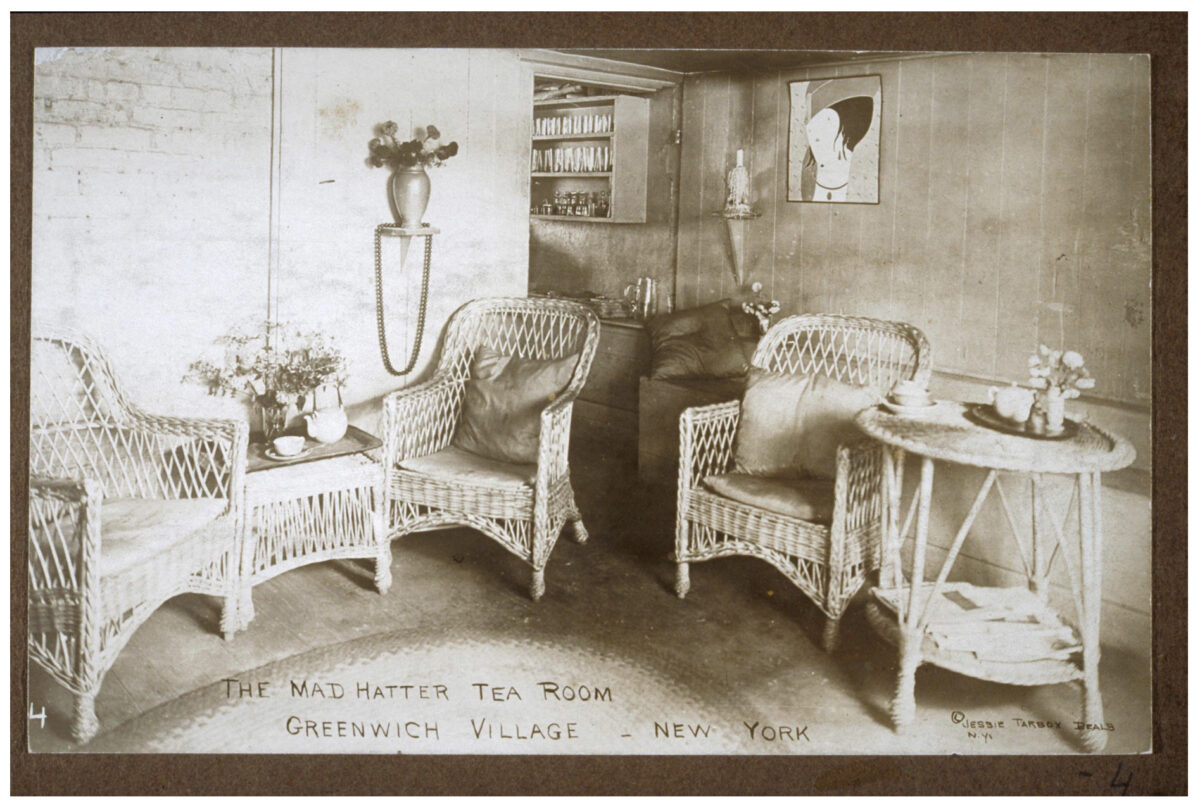

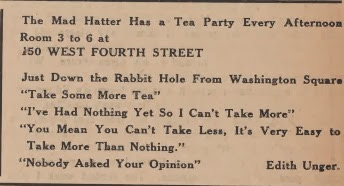
To learn more about the Mad Hatter tea room, read “The Mad Hatter Tearoom — No. 150 West 4th Street” on the Daytonian in Manhattan Blog.
February 27, 1915
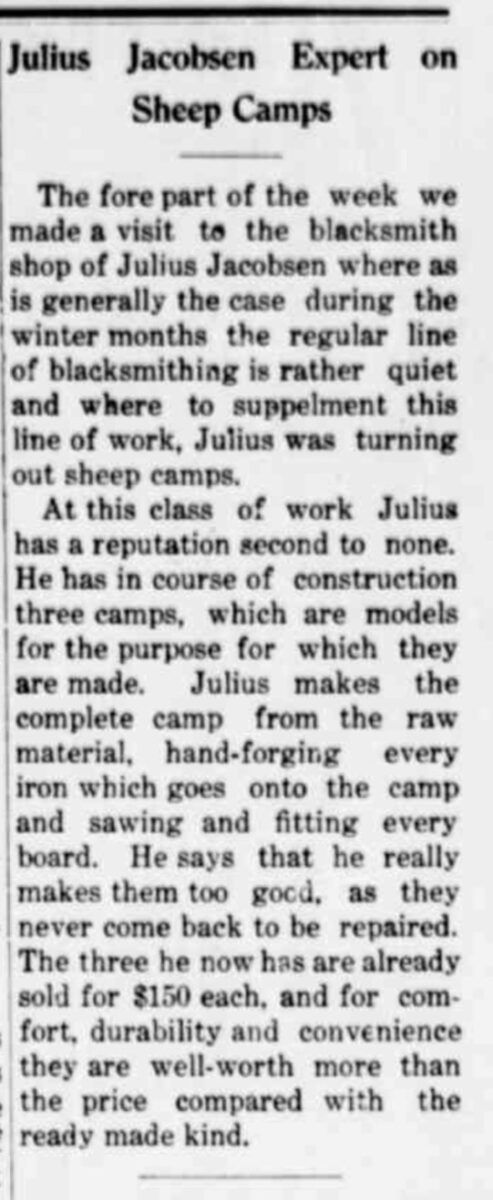
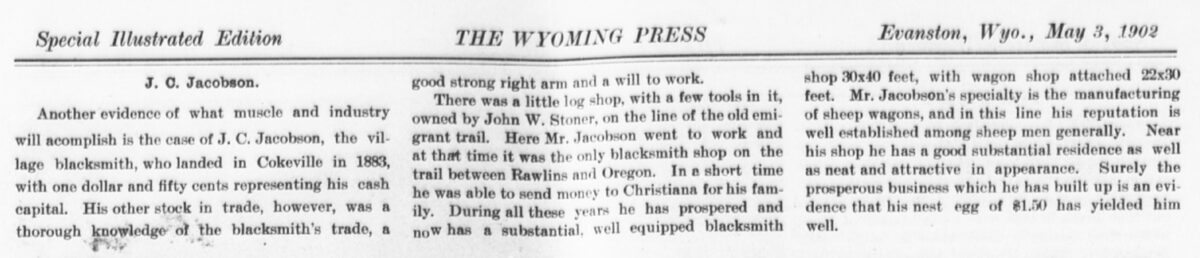
May 3, 1902
January 1, 1886
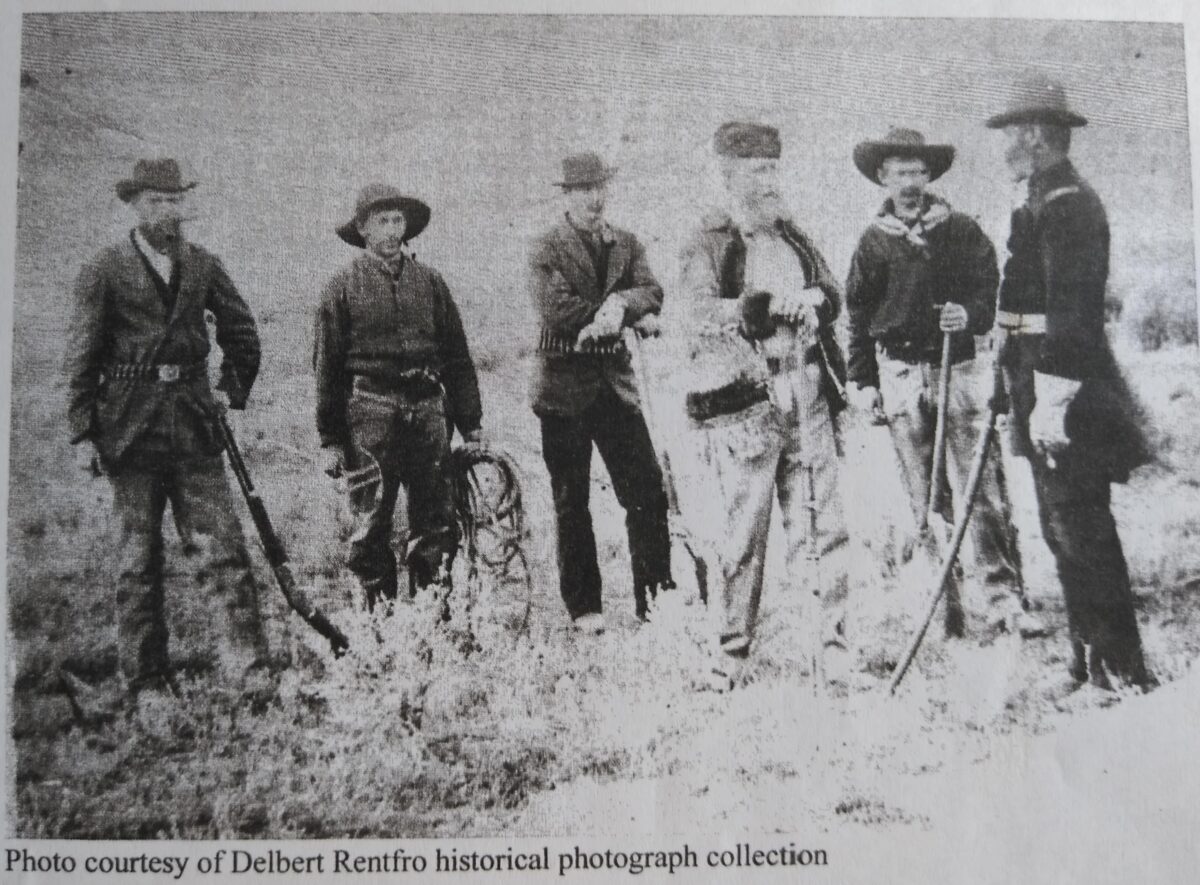
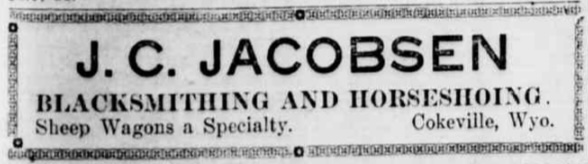
January 1, 1883
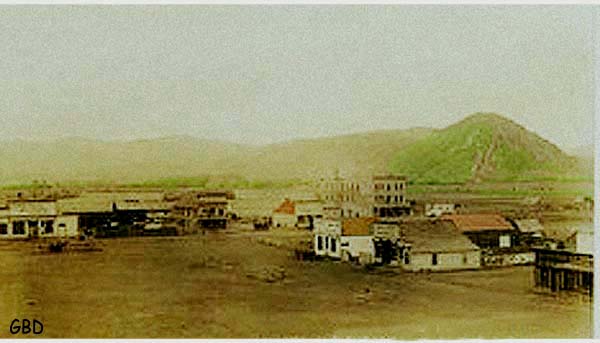
“History of the Town of Cokeville”
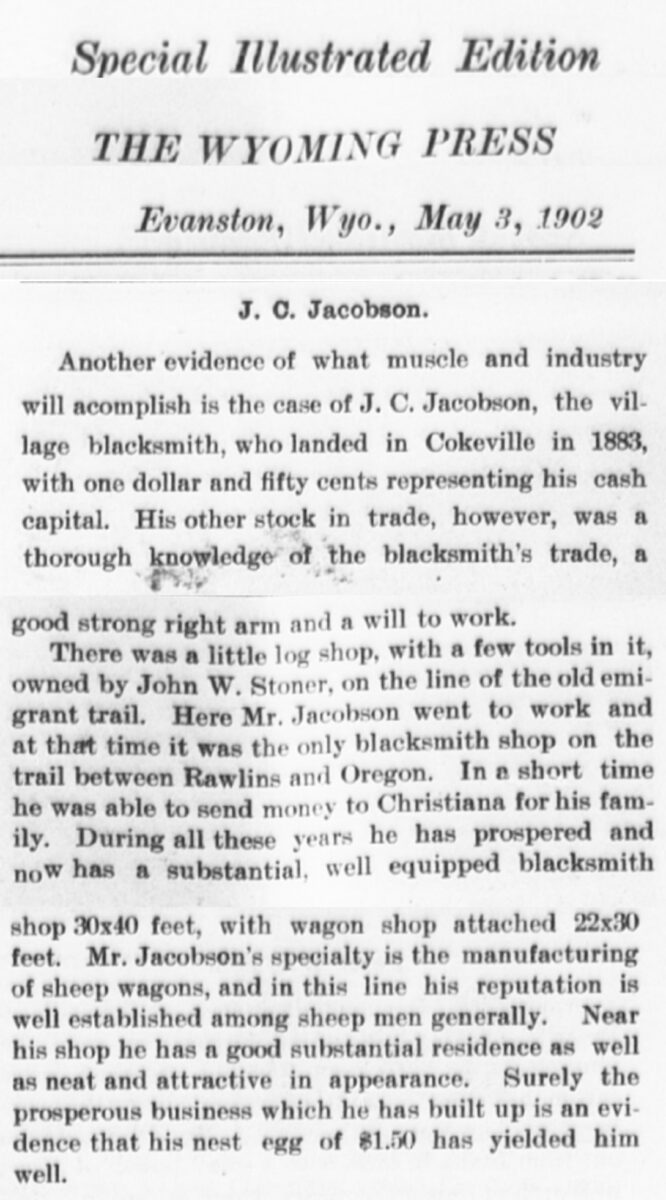
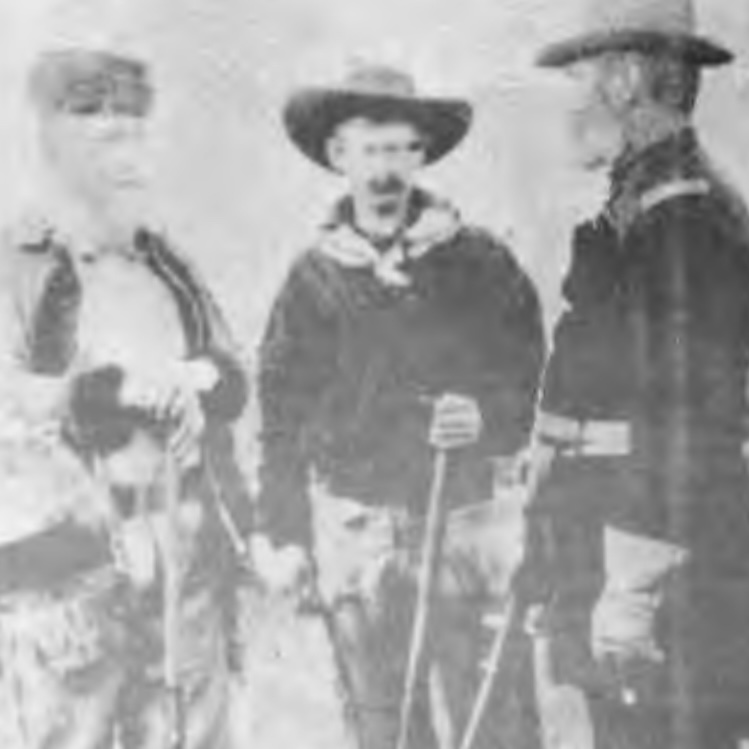
Before 1900 came many others seeking opportunity in the agricultural profession and the support of it. In 1883 Julius C. Jacobsen, a young blacksmith of Norwegian birth, fitted up a shop in the building first put up by Stoner, and specialized in the making of sheep wagons. He started with a dollar and a half in his pocket, but by honest workmanship soon built a flourishing business and a comfortable home, for this was the first place of its kind west of Rawlins on the Oregon Trail, the road still used by travelers to the northwest.
An excerpt from “Collections Cokeville” compiled by Eva Clark, Cokeville Historical Society

April 23, 1882
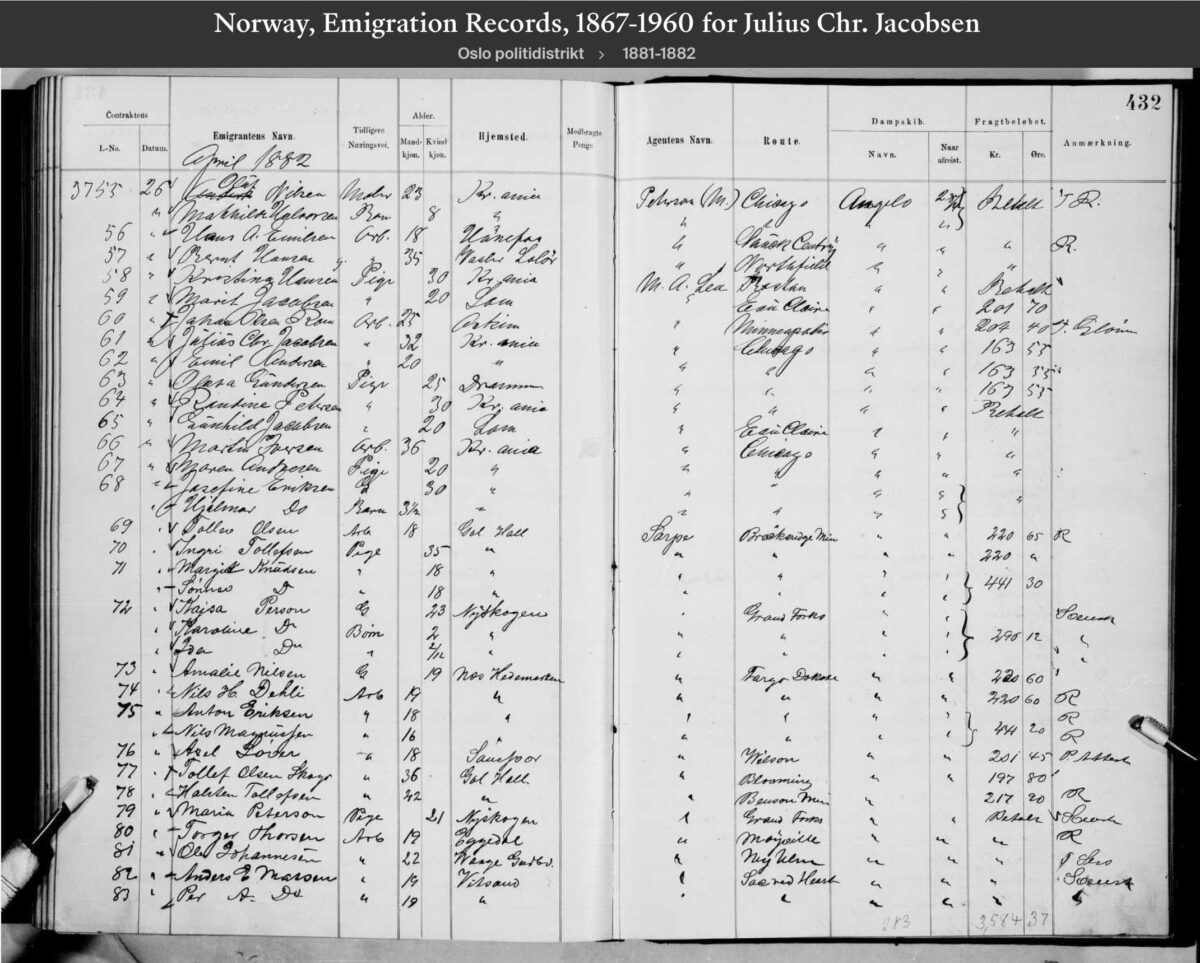
Julius Christian Jacobsen boarded the emigrant steamer “Angelo” in Oslo, Norway and headed for New York. He soon continued further west and ended up in Cokeville, Wyoming, where he was later joined by his wife and three children.